sudokUI › Sudoku techniques › Sue de Coq
Sue de Coq in sudoku
Two-Sector Disjoint Subsets · how it fits
Two or three box cells in one row or column hold two more candidates than cells; two bivalue cells, one elsewhere in each unit, split four of those candidates.
Why it works
With as many cells as candidates, the pattern places every candidate once. The candidates of the box's bivalue cell are removed from the rest of the box, the other bivalue cell's from the rest of the row or column, and any remaining candidate from both.
How to spot it
Look for two or three crowded cells where a box meets a row or column, with a bivalue cell elsewhere in each of those units.
Worked example
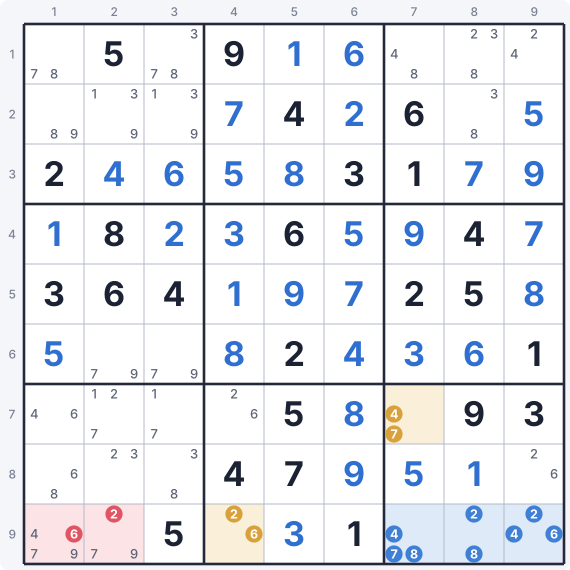
Sue de Coq: r9c7, r9c8, r9c9 (24678) with r9c4 in the line and r7c7 in the box form a locked set; line digits are cleared from the rest of the line, box digits from the rest of the box. So 2 is removed from r9c2; 6 is removed from r9c1.
Practise it on a real puzzle. sudokUI generates a puzzle that needs Sue de Coq and takes you straight to the position where it applies. Hints draw the pattern on the board and explain the step.
In a puzzle's rating
Each time the solver needs Sue de Coq, the puzzle's difficulty rating grows by 250. Its class is Unfair. It is needed in 1 in 320 puzzles that sudokUI generates. How the rating works.