sudokUI › Sudoku techniques › Exocet
Exocet in sudoku
Along one row or column, two base cells in one box together hold three or four candidates; its other two boxes each have a target seeing neither base nor target.
Why it works
When every base digit, once placed in a base cell, is also forced into a target, the targets hold the base's two digits. Targets lose every candidate that is not a base digit, and base digits absent from both targets leave both base cells.
How to spot it
Start from two cells in one box and row or column with three or four candidates, then trace each digit alone from base to targets.
Worked example
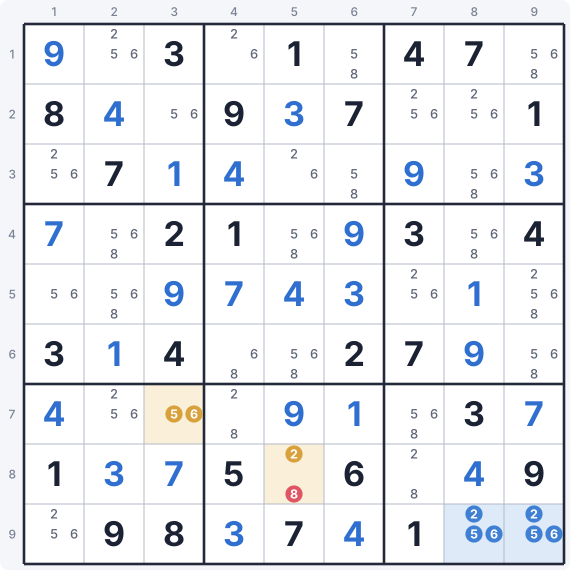
Exocet: base r9c8, r9c9 (256) with targets r7c3 and r8c5: a complete placement analysis proves the base digits must land in the targets, so the targets keep only base candidates.
The solver uses this on the hardest puzzles. It has no pattern to spot, so it is not offered in practice.
In a puzzle's rating
Each time the solver needs Exocet, the puzzle's difficulty rating grows by 450. Its class is Extreme. It is needed in 1 in 160,000 puzzles that sudokUI generates. How the rating works.
More last resort
Double Exocet · Pattern Overlay · Forcing Chain · Digit Forcing Chain · Nishio Forcing Chain · Cell Forcing Chain · Unit Forcing Chain · Forcing Net · Brute Force