sudokUI › Sudoku techniques › Unique Rectangle Type 4
Unique Rectangle Type 4 in sudoku
A rectangle in exactly two boxes: two corners hold only X and Y, the other two hold extras too and are the only places for X in a shared unit.
Why it works
One of those two corners must be X. If the other were Y, the rectangle would hold only X and Y and swapping them would give a second solution, so assuming the puzzle has exactly one solution, Y is removed from both corners.
How to spot it
After finding two bivalue corners, check whether X or Y has exactly two places in a unit shared by the other two corners.
Worked example
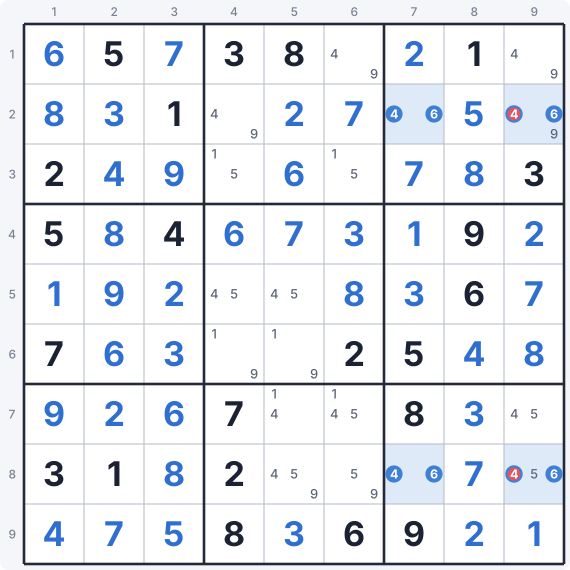
Unique Rectangle Type 4: 6 is locked into r2c9/r8c9; keeping 4 there would force the deadly pattern, so 4 is removed from both.
Practise it on a real puzzle. sudokUI generates a puzzle that needs Unique Rectangle Type 4 and takes you straight to the position where it applies. Hints draw the pattern on the board and explain the step.
In a puzzle's rating
Each time the solver needs Unique Rectangle Type 4, the puzzle's difficulty rating grows by 100. Its class is Hard. It is needed in 1 in 99 puzzles that sudokUI generates. How the rating works.
More uniqueness
BUG+1 · Unique Rectangle Type 1 · Unique Rectangle Type 2 · Unique Rectangle Type 3 · Unique Rectangle Type 5 · Unique Rectangle Type 6 · Hidden Rectangle · Avoidable Rectangle Type 1 · Avoidable Rectangle Type 2 · Extended Rectangle